




So I add my voice to the growing chorus of reminders that Nebula nominations close on the 31st, and for all you SFWAwifians out there--this is your big chance to make your dues seem worthwhile, and also, more importantly, to bring to wider attention the high-lights of your reading year.
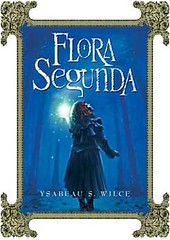
It takes ten recommendations to put a work on the preliminary ballot. There's lots of good stuff on the Recommended List that only need a few more nominations to nudge it over that threshold--including, (dare I say), FLORA SEGUNDA, which is currently standing at nine recommendations...(!!)
Check out the report, which is available on the SFWA website, and see if there is anything you feel strongly enough about to put your recommendation behind. The Andre Norton Award in particular could use some love...we are in the middle a golden age of YA books, and not much is ending up on the ballot via the nomination process. I realize I'm as guilty of this as anyone, and I've made it my new year's resolution to rectify that fact. The Norton hasn't been around that long, and is still in the process of sinking into the SFWAian fore-brain--so let's try to see if we can raise the Award's profile a bit...
If you were thinking about nominating anything at all--novel, short story, novella, novelette, young adult--now is the time. After the 31st, it's all shoulda wouda counda. The Nebs are one place that your vote really does count.
Saturday, December 22, 2007

Bothwell's Booties
Now that it is miserable slushy muddy freezy icy outside, Bothwell has to wear his booties when we take long walks. He's not so super keen on these booties, but he's even less keen on slushy muddy freezy icyness getting between his toes, so wear the boots he must. Once he's got them on he usually forgets about them, but while I'm trying to wrestle his limp paw into the boot itself, Bothwell turns up the Misery until it could probably be seen in South Africa.
Life's tough.
Anyway, once we get on the street, so many people stop and ask us where we got the boots, that I feel safe in recommending them now to anyone who might have a dog with delicate paws. The brand is called Neo Paws, and I highly recommend them. The boots are sturdy, and if put on properly impossible for Dog to get off, no matter how high he prances and shakes his legs. The website has instructions on how to measure paws, and they are very easy to deal with--I initially bought the wrong size for Bothwell's back feet, but I had no problem exchanging; in fact, they didn't even wait to receive the old boots before they sent me new ones.
In fact, the boots are so good that they are used by Search and Rescue dogs all over the country. If that's not a recommendation, I don't know what is.
Neo-Paws also has rain-coats, seat-belts, and Doggles. I'm not sure that Bothwell is ready for Doggles, but if he decides to join Devilman on his motorcycle we'll have to talk...
p.s. Speaking of Bothwell, while we were out in the back yard earlier today he sniffing around some trees; when I called him back, he ran towards me joyfully, with the back half of a poor little rabbit hanging out of his mouth. Yuck! He didn't kill it--just found the left-overs, but still, disgusting...
Life's tough.
Anyway, once we get on the street, so many people stop and ask us where we got the boots, that I feel safe in recommending them now to anyone who might have a dog with delicate paws. The brand is called Neo Paws, and I highly recommend them. The boots are sturdy, and if put on properly impossible for Dog to get off, no matter how high he prances and shakes his legs. The website has instructions on how to measure paws, and they are very easy to deal with--I initially bought the wrong size for Bothwell's back feet, but I had no problem exchanging; in fact, they didn't even wait to receive the old boots before they sent me new ones.
In fact, the boots are so good that they are used by Search and Rescue dogs all over the country. If that's not a recommendation, I don't know what is.
Neo-Paws also has rain-coats, seat-belts, and Doggles. I'm not sure that Bothwell is ready for Doggles, but if he decides to join Devilman on his motorcycle we'll have to talk...
p.s. Speaking of Bothwell, while we were out in the back yard earlier today he sniffing around some trees; when I called him back, he ran towards me joyfully, with the back half of a poor little rabbit hanging out of his mouth. Yuck! He didn't kill it--just found the left-overs, but still, disgusting...
Friday, December 21, 2007
Azul!
Whoo-hoo--Bilskinir Blue has been named Colour of the Year--2008!
Of course, they don't call this shade Bilskinir Blue; they call it blue iris or shade 18-3943. But we know better, don't we.
That Paimon, he's subtle and behind the scenes, but he's busy.
Of course, they don't call this shade Bilskinir Blue; they call it blue iris or shade 18-3943. But we know better, don't we.
That Paimon, he's subtle and behind the scenes, but he's busy.
Catch & Release Books
Last year Devilman started to leave books that he had finished reading on the El for others to find, hopefully read, and pass on. A stealthy way to encourage reading, plus give a book a second chance at a reader, rather than spending the rest of its life languishing on a book shelf.
Now, according to the NY Times, I see that once again he is an early adopter; whereas Devilman was just doing his book drops with no thought of tracking, members of Bookcrossing register their books before letting them go, and then hope that whoever picks the book up will notice the registration number, and check into the website with their wheres/whens of their findings.
It's a cool idea; even if no one ever acknowledges finding the book, there's always the hope that whoever finds the book will read it and appreciate it. Of course, in today's security paranoid age, you might want to be careful of where you drop your book; it would defeat the purpose if the copy of The Shining ended up triggering a bomb disposal unit. But some things are worth the risk.
The closest I've ever come to giving a book to a stranger was back when I lived in Yerba Buena. I was riding the N-Judah one day, while reading a copy of A Rebours. A kid got on, looked about maybe 16-17 years old. He had long hair, a battered leather messenger bag and was wearing a 1950s suit and a tie. In a sea of track suits and hoodies; he stood out--definitely he was going Against the Grain. I had seen him a couple of times before, and he was always dressed the same. When the street car got to my stop, I shoved the book at him saying: "You should read this." He took it and I jumped off. I have no idea what he thought; probably that I was crazy--but I hope he read the book...I never saw him on the street car again...So that's not quite the same thing as Bookcrossing, but still, my attempt to do my small part in introducing young minds to the decadent movement and Gustave Moreau.
I have sometimes been tempted to sneak small press books onto the shelves of commodity bookstores but never had the nerve to try.
Now, according to the NY Times, I see that once again he is an early adopter; whereas Devilman was just doing his book drops with no thought of tracking, members of Bookcrossing register their books before letting them go, and then hope that whoever picks the book up will notice the registration number, and check into the website with their wheres/whens of their findings.
It's a cool idea; even if no one ever acknowledges finding the book, there's always the hope that whoever finds the book will read it and appreciate it. Of course, in today's security paranoid age, you might want to be careful of where you drop your book; it would defeat the purpose if the copy of The Shining ended up triggering a bomb disposal unit. But some things are worth the risk.
The closest I've ever come to giving a book to a stranger was back when I lived in Yerba Buena. I was riding the N-Judah one day, while reading a copy of A Rebours. A kid got on, looked about maybe 16-17 years old. He had long hair, a battered leather messenger bag and was wearing a 1950s suit and a tie. In a sea of track suits and hoodies; he stood out--definitely he was going Against the Grain. I had seen him a couple of times before, and he was always dressed the same. When the street car got to my stop, I shoved the book at him saying: "You should read this." He took it and I jumped off. I have no idea what he thought; probably that I was crazy--but I hope he read the book...I never saw him on the street car again...So that's not quite the same thing as Bookcrossing, but still, my attempt to do my small part in introducing young minds to the decadent movement and Gustave Moreau.
I have sometimes been tempted to sneak small press books onto the shelves of commodity bookstores but never had the nerve to try.
Friday, December 14, 2007
White Space...
In today's NYT an article about "white space" which is (apparently) the name given to places where people do actual work, as opposed to their desks where they are supposed to be working but can't because their desks are too cluttered with nick-nacky work that is getting in the way of their real work.
The phrase is new to me, but not the concept. I find I've been an aficianado of White Space for some time. Despite the fact that my desk is enormous (I inherited it from Devilman who bought it years and years ago from OfficeMax but then abandoned it when the legs broke...I fished the top out of the trash and my pa made new legs out of gas pipes, and aqui, as good as new)...despite my desk's size, I can't seem to get any work done on it. Probably because it's always covered with crap: pens, pencils, notebooks, lamps, stamps, ink wells, cards cases, tape rolls, jewelry boxes, books, dog treats, plastic squids, bottles of black nail polish, pictures of John Bell Hood and U.S. Grant, a holiday Jack Ball, etc..
So I only sit at my desk to web-surf and blog. When I need to write, I go to the dining room table which is blissfully clear of crap, and gets sunlight in the afternoon. (My office has windows facing west so it's pitch black by 2 p.m.) The dining room is where I wrote most of FLORA'S DARE. FLORA SEGUNDA was mostly written in my parent's laundry room in Arivaipa Territory; it's tiny and warm and floods with light in the afternoon.* I find lots of natural light helps with the creativity immensely. Many people go to cafes to write but that doesn't work for me. While there are many nice cafes in Porkopolis, I don't find any of them conducive to lingering in, plus, I personally get really annoyed at people who park in cafes for hours and hours nursing the same cup of coffee, monopolizing all the tables so that those of us who just want to sit for ten minutes to drink our cappuccinos can not. Also, I get distracted by people watching. In my dining room and my parent's laundry room there are no people to distract you, just grunting sleeping dogs, who are easily tuned out.
So those are my current White Spaces, which would more accurately be defined at Dark Green & Gold Lincrusta Space, and Sunlit Laundry Machine Space.
How 'bout you?
The phrase is new to me, but not the concept. I find I've been an aficianado of White Space for some time. Despite the fact that my desk is enormous (I inherited it from Devilman who bought it years and years ago from OfficeMax but then abandoned it when the legs broke...I fished the top out of the trash and my pa made new legs out of gas pipes, and aqui, as good as new)...despite my desk's size, I can't seem to get any work done on it. Probably because it's always covered with crap: pens, pencils, notebooks, lamps, stamps, ink wells, cards cases, tape rolls, jewelry boxes, books, dog treats, plastic squids, bottles of black nail polish, pictures of John Bell Hood and U.S. Grant, a holiday Jack Ball, etc..
So I only sit at my desk to web-surf and blog. When I need to write, I go to the dining room table which is blissfully clear of crap, and gets sunlight in the afternoon. (My office has windows facing west so it's pitch black by 2 p.m.) The dining room is where I wrote most of FLORA'S DARE. FLORA SEGUNDA was mostly written in my parent's laundry room in Arivaipa Territory; it's tiny and warm and floods with light in the afternoon.* I find lots of natural light helps with the creativity immensely. Many people go to cafes to write but that doesn't work for me. While there are many nice cafes in Porkopolis, I don't find any of them conducive to lingering in, plus, I personally get really annoyed at people who park in cafes for hours and hours nursing the same cup of coffee, monopolizing all the tables so that those of us who just want to sit for ten minutes to drink our cappuccinos can not. Also, I get distracted by people watching. In my dining room and my parent's laundry room there are no people to distract you, just grunting sleeping dogs, who are easily tuned out.
So those are my current White Spaces, which would more accurately be defined at Dark Green & Gold Lincrusta Space, and Sunlit Laundry Machine Space.
How 'bout you?
Book Reviews...
A couple of months ago, I was somehow suckered into getting a subscription to The New Republic. I say suckered because I normally don't agree in the slightest with the slant of most of their political coverage, and find their arts reviews to be a bit high faultin' even for me. But in the December 10th issue, I find an editorial I wholeheartedly agree with (with which I wholeheartedly agree).
In The Battle of the Book the TNR editors lament the disappearance of the professional book review from print media. Quoth: "A newspaper discloses its view of the world clearly by what it chooses to cover and not to cover, and with what degree of rigour and pride. When you deprive the coverage of books of adequate space and talent, you are declaring that books are not important, even if you and your wife belong to a book club and your Amazon account is a mile long."
I'm going to breeze right over the TNR's assumption that newspapers are controlled completely by men ("you and your wife"), 'cause now that Katherine Graham is dead, they probably are, and agree with the rest of the article. It's true that we are in a golden age of book reviewing, in terms of what is available on the web, but as web reviewers wax, newspaper reviewers wane, or become increasingly dumbed down, and this is a real pity, I think. Writing an intelligent thoughtful book review which places in the book in question into a historical and artistic context and which sparks readers to consider the book in a new and unexpected way is difficult. (That's why I don't review books myself, except in the most cursory "I like it this is why" fashion.) There should be more challenging book reviews, not less. Newspapers used to pride themselves on supporting this type of book review. With a few exceptions, and growing dimmer every year, no longer.
Recently there has been some controversy over whether or not book bloggers are bringing the reviewing world down; it's not my intent to get pulled into that controversy. In my mind there is room for everyone: amateurs, semi-professionals, professionals. The more book reviews the better--but even today newspapers, for better or for worse, still carry with them an aura of privilege--the attitude that if something is important it will be covered in the newspaper, and if it's not, then it can't really be that important. By dropping book reviews, the newspapers are sending a powerful message--plus, the price point of a newspaper is much lower than a magazine, thus reaching a wider range of people. The TNR has a point, I think, when they argue: "The intelligent discussion of a book has the power to change its reader's ideas about how he votes or who he loves--to furnish nothing less than a 'criticism of life'...Book reviewing is a training for controversy, without which no open society can flourish."
Newspapers & magazines who still maintain vigoruous and challenging interviews, IMHO, include: The Financial Times, The Wall Street Journal, The Washington Post, The New Yorker, The New Scientist, The Economist* & The Guardian. Alas, that most of these publications are magazines, not newspapers. I do not care one wit for the reviews in The New York Times, which seem to be written solely for the purpose of shilling "high-brow" fiction and inspirational up-lifting ladies' book club books.**
I leave you with one last quote: "When a book review is done well, it transcends leisure. It inducts its reader into the enchanted circle of those who really live by their minds. It is a small but significant aid to genuine citizenship, to meaningful living."
Hear Hear!
In The Battle of the Book the TNR editors lament the disappearance of the professional book review from print media. Quoth: "A newspaper discloses its view of the world clearly by what it chooses to cover and not to cover, and with what degree of rigour and pride. When you deprive the coverage of books of adequate space and talent, you are declaring that books are not important, even if you and your wife belong to a book club and your Amazon account is a mile long."
I'm going to breeze right over the TNR's assumption that newspapers are controlled completely by men ("you and your wife"), 'cause now that Katherine Graham is dead, they probably are, and agree with the rest of the article. It's true that we are in a golden age of book reviewing, in terms of what is available on the web, but as web reviewers wax, newspaper reviewers wane, or become increasingly dumbed down, and this is a real pity, I think. Writing an intelligent thoughtful book review which places in the book in question into a historical and artistic context and which sparks readers to consider the book in a new and unexpected way is difficult. (That's why I don't review books myself, except in the most cursory "I like it this is why" fashion.) There should be more challenging book reviews, not less. Newspapers used to pride themselves on supporting this type of book review. With a few exceptions, and growing dimmer every year, no longer.
Recently there has been some controversy over whether or not book bloggers are bringing the reviewing world down; it's not my intent to get pulled into that controversy. In my mind there is room for everyone: amateurs, semi-professionals, professionals. The more book reviews the better--but even today newspapers, for better or for worse, still carry with them an aura of privilege--the attitude that if something is important it will be covered in the newspaper, and if it's not, then it can't really be that important. By dropping book reviews, the newspapers are sending a powerful message--plus, the price point of a newspaper is much lower than a magazine, thus reaching a wider range of people. The TNR has a point, I think, when they argue: "The intelligent discussion of a book has the power to change its reader's ideas about how he votes or who he loves--to furnish nothing less than a 'criticism of life'...Book reviewing is a training for controversy, without which no open society can flourish."
Newspapers & magazines who still maintain vigoruous and challenging interviews, IMHO, include: The Financial Times, The Wall Street Journal, The Washington Post, The New Yorker, The New Scientist, The Economist* & The Guardian. Alas, that most of these publications are magazines, not newspapers. I do not care one wit for the reviews in The New York Times, which seem to be written solely for the purpose of shilling "high-brow" fiction and inspirational up-lifting ladies' book club books.**
I leave you with one last quote: "When a book review is done well, it transcends leisure. It inducts its reader into the enchanted circle of those who really live by their minds. It is a small but significant aid to genuine citizenship, to meaningful living."
Hear Hear!
Monday, December 10, 2007
Apres Flora, A New Idea
The other night I had a new idea for a new novel.
Flora isn't in it. Actually, no one we already know is in it, but it is set in Califa. It's a love story.
High concept: Bluebeard crossed with The Little Mermaid crossed with the Beggar's Opera, lashed with a heavy dose of Goth (the music and the revival.)
Low concept: What if the little Mermaid gave away her voice & tail to marry the Prince only to discover that the Prince was Bluebeard? What would she do then, huh?
Did I mention it was a love story?
Anyway, so the idea just came to me full-form and I've already written the opening. Of course, I'm supposed to be thinking about the further adventures of Flora, but I may well work on this for a time, while I continue doing research for the next Flora book. It's nice to work on something that feels less under the gun. And it's nice to be excited about an idea, too. I've been wanting to write something more explicitly fairy-tale riffing (though there is a fairy tale riff in FLORA'S DARE), and also something more explicitly a girl's first love, but nothing specific had come to my mind previously.
I usually start stories with characters--I can have a vague idea, but if if the idea has no character attached to it, then the idea doesn't go too far. But sometimes a character just springs full formed, a la Athena, from my brain and then its just a matter of listening to what the character has to say. Once the character introduces him/her/itself, the rest is easy. So, I suppose I should really say not that I had an idea for a story, but rather that a character wanting to tell a story--her story--popped in last night. I hope she's gonna stick around for a while, 'cause I think it's a pretty good story.
Flora isn't in it. Actually, no one we already know is in it, but it is set in Califa. It's a love story.
High concept: Bluebeard crossed with The Little Mermaid crossed with the Beggar's Opera, lashed with a heavy dose of Goth (the music and the revival.)
Low concept: What if the little Mermaid gave away her voice & tail to marry the Prince only to discover that the Prince was Bluebeard? What would she do then, huh?
Did I mention it was a love story?
Anyway, so the idea just came to me full-form and I've already written the opening. Of course, I'm supposed to be thinking about the further adventures of Flora, but I may well work on this for a time, while I continue doing research for the next Flora book. It's nice to work on something that feels less under the gun. And it's nice to be excited about an idea, too. I've been wanting to write something more explicitly fairy-tale riffing (though there is a fairy tale riff in FLORA'S DARE), and also something more explicitly a girl's first love, but nothing specific had come to my mind previously.
I usually start stories with characters--I can have a vague idea, but if if the idea has no character attached to it, then the idea doesn't go too far. But sometimes a character just springs full formed, a la Athena, from my brain and then its just a matter of listening to what the character has to say. Once the character introduces him/her/itself, the rest is easy. So, I suppose I should really say not that I had an idea for a story, but rather that a character wanting to tell a story--her story--popped in last night. I hope she's gonna stick around for a while, 'cause I think it's a pretty good story.
Paper vs. Plastic, Part II
(it seems to be Environmental week here at the CPG Society Page--!)
Interesting article at the NYTimes on whether buying local is always good for one's carbon footprint--the equation is slightly more complicated than one might think...About six months ago The Economist ran a similar article, so I'd already been considering most of the points raised in the Times article. I would not by any stretch call myself an environmentalist--maybe barely environmentally conscious, but I suppose it certainly behooves all us to think about our own actions regarding the environmental impact of our choices, and thus am I thinking.
On the other hand, if you think too hard about the various contradictions, trade-offs, conflicting reports, etc., you'll soon find yourself completely paralyzed--crushed with guilt for whatever choices you might make! Have you ever noticed that these days EVERYTHING is Bad for You, Bad for the Country, Bad for the Environment, Bad Bad Bad...?
Interesting article at the NYTimes on whether buying local is always good for one's carbon footprint--the equation is slightly more complicated than one might think...About six months ago The Economist ran a similar article, so I'd already been considering most of the points raised in the Times article. I would not by any stretch call myself an environmentalist--maybe barely environmentally conscious, but I suppose it certainly behooves all us to think about our own actions regarding the environmental impact of our choices, and thus am I thinking.
On the other hand, if you think too hard about the various contradictions, trade-offs, conflicting reports, etc., you'll soon find yourself completely paralyzed--crushed with guilt for whatever choices you might make! Have you ever noticed that these days EVERYTHING is Bad for You, Bad for the Country, Bad for the Environment, Bad Bad Bad...?
Good Advice!
So in prep for decorating the Xmas tree, I was unwrapping the Xmas ornaments, which I inherited from an elderly great uncle who is with us no more...He didn't use this ornaments much in his last years, and so most of them are quite old and fragile. I haven't used them much recently either, so they are still in the old paper in which he wrapped them last, lo those many years ago. And I really do mean old paper, including old paper towels, old Kleenex, and old napkins. The kind of paper that is meant to be disposable, and which doesn't usually survive more than a few weeks, much less forty years.
One of these old napkins appeared to be of the cocktail species; you know the kind, cute little picture on the front, pithy sayings on the back. (Do they make them this way anymore? I'm not sure?) Circa mid-1960s, I'd judge. The cute picture shows an old timey country scene: covered bridge, furry little surrey with a fringe on top, etc. "May all the bridges you cross be covered ones" the napkin says hopefully. On the back, the platitudes continue:
And my favorite:
Now I have no idea what any of this means, but some of it sounds like pretty good advice to me, most particularly that last one. There isn't always pie back, but it's worth keeping the space open, just in case.
One of these old napkins appeared to be of the cocktail species; you know the kind, cute little picture on the front, pithy sayings on the back. (Do they make them this way anymore? I'm not sure?) Circa mid-1960s, I'd judge. The cute picture shows an old timey country scene: covered bridge, furry little surrey with a fringe on top, etc. "May all the bridges you cross be covered ones" the napkin says hopefully. On the back, the platitudes continue:
- You'ns ain't the only pepples on the peach.
- We grow too soon oldt and too late schmardt.
- Put your umbrella up. It's making down out.
- They looked the window through.
- Hope it gives what it looks like for onct.
- Run the Alley Up. Jump the Fence Over.
- Sorry you don't feel so pretty good.
- The coat doesn't fit, not?
- Run the steps up.
- My, you look good in the face.
- Sign: "Keep the Paint Off".
And my favorite:
- Don't eat yourself full--there's pie back.
Now I have no idea what any of this means, but some of it sounds like pretty good advice to me, most particularly that last one. There isn't always pie back, but it's worth keeping the space open, just in case.
The Goddess of Love
I can't help it; I adore Courtney Love. Ayah, so she's done some super crazy things, some of which are horrible and not to be applauded, but, you know, I still love her. She's like the last great rockstar, and her music is incredible. Doll Parts remains one of my favorite songs. She is clearly beset with the same issues as most modern women, including body image, motherhood, money-management, and dating, but she's played out these issues in an incredibly public way in an arena that even today remains pretty male-centric. (Rock and roll). She's a Dionysian gal in an increasingly Apollonian world.
And Madama Love is pretty self-aware too, and amazingly lucid, considering everything, as this interview in the Telegraph attests. Consider this quote: "I used to play up to it a bit when I was on drugs because who cares: sex, drugs, rock?'n'roll, waaaah! I always seem to come number two to Keith Richards in lists of greatest hell-raisers of all time. But if I was a guy, I wouldn't even be on the list! I didn't know it was such a guy's job. It's like playing football in high heels and lipstick; no wonder it smears.'"
Ayah, so.
Plus when was the last time a celebrity blogged so candidly about money? Apparently she's got some ID theft and credit score problems, and she's offering herself up as an example of why women should keep track of their own finances. (You have to click through to get to her blog--her typing is hit or miss but her entries are always interesting.)
That Madama Love is alive today at all is a credit to her survival skills; she seems to be in a up-turn phase right now and I hope it continues. And I'm looking forward to her next album, which is supposed to be out next year.
And Madama Love is pretty self-aware too, and amazingly lucid, considering everything, as this interview in the Telegraph attests. Consider this quote: "I used to play up to it a bit when I was on drugs because who cares: sex, drugs, rock?'n'roll, waaaah! I always seem to come number two to Keith Richards in lists of greatest hell-raisers of all time. But if I was a guy, I wouldn't even be on the list! I didn't know it was such a guy's job. It's like playing football in high heels and lipstick; no wonder it smears.'"
Ayah, so.
Plus when was the last time a celebrity blogged so candidly about money? Apparently she's got some ID theft and credit score problems, and she's offering herself up as an example of why women should keep track of their own finances. (You have to click through to get to her blog--her typing is hit or miss but her entries are always interesting.)
That Madama Love is alive today at all is a credit to her survival skills; she seems to be in a up-turn phase right now and I hope it continues. And I'm looking forward to her next album, which is supposed to be out next year.
Wednesday, December 5, 2007
Fashion Victim
I love high fashion.
Actually, perhaps I should clarify. I am very interested in fashion--after all, clothes do make the man/woman/child/butler--but I love couture. Fashion is all about creating market frenzy and marketing frenzy, constantly coming up with new things for people (women) to buy, and then denying people (women) the right to buy those things via price, deliberate shortage, or sizing. It is interesting to see how fashion reflects society, etc., but--
Fashion makes women feel bad; bad they can't wear it, bad they love it, bad they can't afford it, wah wah wah. The lady-mags that shill for fashion are full of pernicious articles that kill women's souls, make them feel inadequate and lacking, destroy their self-confidence and I say this woefully because I like some of the lady-mags, but I have sworn off of them because they are poison. (All except for W, which is full of $500 dollar per oz perfumes, and fashion layouts so abstract you can't even tell what the clothes look like--impossible to take seriously.)
For the most part, the lady-mags do not cover couture, because couture is fashion taken to extremes and of no use to the average ladies. You can't afford it and you couldn't wear it if you could.
What exactly is couture? Couture is...well, I'll let the Master of Couture, John Galliano, via an interview with the FT, explain: "I think couture has to be the dream...it is the undiluted, unrestrained idea."
No one expects to wear couture in its purest form. It's too expensive, too cumbersome, too crazy. And because it's divorced from actual market forces, it is fanciful, insane, dreamy, abstract, visionary. Re Dior's 2004 Collection, I again quote the FT: the "Austro-Hungarian Princess collection, where models loomed on 6in platforms complete with crowns, corsets, and fur-and crystal-trimmed exaggerated hourglass figures; and last January's Japan-inspired Origami collection of New Look meets kimono suits and dresses, folded and pleated in ever more elaborate and mind bending constructions." Those aren't the clothes you wear to go to Starbucks; they are clothes that foster revolution. (In the case of the French revolution, literally--more on that in a later post.)
And for those few ladies who can handle modified couture, well, no one expects them to wear it on their own: even today a Dior dress has more scaffolding in it than the Empire State Building.
Couture is the science fiction/fantasy of fashion. Designers are unfettered from reality; they use clothing to create stories, to explore ideas, to imagine new worlds and new civilizations. Couture reflects on history past, and reshapes it into history future. It is no less an art form than painting or sculpture. I find it endlessly fascinating; and consequently, I spend a lot of time thinking about how people in Califa dress. It don't always come across in the text, as not everyone may be interested in reading very detailed descriptions of the beading on Flora's Catorcena dress, or the pattern of frogging on Buck's dress uniform--but I still think about it. Califa is my own version of Couture, I guess. Perhaps not as visionary, but a good deal less expensive!
Anyway, this post was inspired by an article about John Galliano in last week's How to Spend It section of the FT. You can read the article in full here, via some weird pdf-like interface. It starts on page 9 and contains some fantastic pictures of Dior dresses, as well as John Galliano and his do-rag being very thoughtful and passionate.
Actually, perhaps I should clarify. I am very interested in fashion--after all, clothes do make the man/woman/child/butler--but I love couture. Fashion is all about creating market frenzy and marketing frenzy, constantly coming up with new things for people (women) to buy, and then denying people (women) the right to buy those things via price, deliberate shortage, or sizing. It is interesting to see how fashion reflects society, etc., but--
Fashion makes women feel bad; bad they can't wear it, bad they love it, bad they can't afford it, wah wah wah. The lady-mags that shill for fashion are full of pernicious articles that kill women's souls, make them feel inadequate and lacking, destroy their self-confidence and I say this woefully because I like some of the lady-mags, but I have sworn off of them because they are poison. (All except for W, which is full of $500 dollar per oz perfumes, and fashion layouts so abstract you can't even tell what the clothes look like--impossible to take seriously.)
For the most part, the lady-mags do not cover couture, because couture is fashion taken to extremes and of no use to the average ladies. You can't afford it and you couldn't wear it if you could.
What exactly is couture? Couture is...well, I'll let the Master of Couture, John Galliano, via an interview with the FT, explain: "I think couture has to be the dream...it is the undiluted, unrestrained idea."
No one expects to wear couture in its purest form. It's too expensive, too cumbersome, too crazy. And because it's divorced from actual market forces, it is fanciful, insane, dreamy, abstract, visionary. Re Dior's 2004 Collection, I again quote the FT: the "Austro-Hungarian Princess collection, where models loomed on 6in platforms complete with crowns, corsets, and fur-and crystal-trimmed exaggerated hourglass figures; and last January's Japan-inspired Origami collection of New Look meets kimono suits and dresses, folded and pleated in ever more elaborate and mind bending constructions." Those aren't the clothes you wear to go to Starbucks; they are clothes that foster revolution. (In the case of the French revolution, literally--more on that in a later post.)
And for those few ladies who can handle modified couture, well, no one expects them to wear it on their own: even today a Dior dress has more scaffolding in it than the Empire State Building.
Couture is the science fiction/fantasy of fashion. Designers are unfettered from reality; they use clothing to create stories, to explore ideas, to imagine new worlds and new civilizations. Couture reflects on history past, and reshapes it into history future. It is no less an art form than painting or sculpture. I find it endlessly fascinating; and consequently, I spend a lot of time thinking about how people in Califa dress. It don't always come across in the text, as not everyone may be interested in reading very detailed descriptions of the beading on Flora's Catorcena dress, or the pattern of frogging on Buck's dress uniform--but I still think about it. Califa is my own version of Couture, I guess. Perhaps not as visionary, but a good deal less expensive!
Anyway, this post was inspired by an article about John Galliano in last week's How to Spend It section of the FT. You can read the article in full here, via some weird pdf-like interface. It starts on page 9 and contains some fantastic pictures of Dior dresses, as well as John Galliano and his do-rag being very thoughtful and passionate.
Where did She Go Again?
Well, I was finishing FLORA'S DARE, and I have been over at live-journal (yswilce).
I'm thinking about actually switching all the way over to lj; so if you haven't been following me there, and wish to follow me at all, you should try catching me there. I've done some cross-posting but not a lot and am not sure if I'm going to continue here. After being introduced to the lj format earlier this summer, I am finding it to be a lot more friendly than the blogger format. There's something about actually having friends which may be somewhat high-school, but is also rather comforting. (You don't have to have an lj account to read an lj journal)
So that's where I've been.
I'm thinking about actually switching all the way over to lj; so if you haven't been following me there, and wish to follow me at all, you should try catching me there. I've done some cross-posting but not a lot and am not sure if I'm going to continue here. After being introduced to the lj format earlier this summer, I am finding it to be a lot more friendly than the blogger format. There's something about actually having friends which may be somewhat high-school, but is also rather comforting. (You don't have to have an lj account to read an lj journal)
So that's where I've been.
Tin Man
Now that FLORA'S DARE has gone to the copy-editor (woo!), I can resume my voyage on the U.S.S.S. Sofa...yesterday's voyage took me to the Outer Zone or the O.Z., via the Sci-Fi Channel's miniseries TIN MAN.
TIN MAN is an up-dating of The Wizard of Oz. Most of all the old favourites are still there, Dorothy, Toto, The Cowardly Lion, the Scarecrow, the Tin Man, but re-imagined--sometimes imaginatively, other times not so much. Dorothy is now a slacker chick with a motorbike named DG; Toto a shape-shifting tutor; The Cowardly Lion a Lion-like empath; the Scarecrow a political prisoner whose brains have been removed as part of a reeducation process; and the Tin Man, a Jimmy Stewart-like sheriff. Like I said, sometimes imaginatively, sometimes not so much.
Anyway, there's some very cool special effects, tho' it's a huge pity the series is not in HD, and some very cool magic stuff. Like most hero's journey type narratives, the characters spend so much time on the road (when do they eat, when do they sleep, when do they pee?) that the story is more about the journey than about the hero. Also, like many CGI heavy series these days, all the money has gone into the CGI; for example, the Wicked Witch only has one outfit. Now, if you were the wicked witchy overlord of a huge magickal kingdom would you only have one outfit? Naw, I didn't think so...you'd be John Galliano's dream client...Also, losing out to CGI is the plot: clearly they decided not to waste too much money on writers either. The story is riddled with plot-holes the size of black holes. Does the director not notice these holes, wondered Devilman, or does he just not care? Says I: No and yes.
However, Tin Man does have some of my favorite, oft overlocked actors: Alan Cumming, Neal McDonough, and the vastly underated Callum Keith Rennie, who I'm just dying to have play Hotspur in the joint Peter Jackson/Terry Gilliam multi-billion dollar movie version of FLORA SEGUNDA. (Tho' I admit to sometimes having a yearning for Michael Biehn instead.)
The Wicked Witch's thugs have very cool leather trenchcoats. Too bad they don't know how to man a picket line, patrol, or secure a perimeter. Why do Evil Baddies always have such useless goons? Perhaps they can't compete with Blackwater. Maybe they should just hire Blackwater; I'll bet those jerks would jump at the chance to work with flying monkeys and wear ankle-length leather trench-coats.
Anyway, I wouldn't go out of my way to watch Tin Man, but if you happen to catch it, you could probably watch it and read a magazine at the same time, and not be too bored.
TIN MAN is an up-dating of The Wizard of Oz. Most of all the old favourites are still there, Dorothy, Toto, The Cowardly Lion, the Scarecrow, the Tin Man, but re-imagined--sometimes imaginatively, other times not so much. Dorothy is now a slacker chick with a motorbike named DG; Toto a shape-shifting tutor; The Cowardly Lion a Lion-like empath; the Scarecrow a political prisoner whose brains have been removed as part of a reeducation process; and the Tin Man, a Jimmy Stewart-like sheriff. Like I said, sometimes imaginatively, sometimes not so much.
Anyway, there's some very cool special effects, tho' it's a huge pity the series is not in HD, and some very cool magic stuff. Like most hero's journey type narratives, the characters spend so much time on the road (when do they eat, when do they sleep, when do they pee?) that the story is more about the journey than about the hero. Also, like many CGI heavy series these days, all the money has gone into the CGI; for example, the Wicked Witch only has one outfit. Now, if you were the wicked witchy overlord of a huge magickal kingdom would you only have one outfit? Naw, I didn't think so...you'd be John Galliano's dream client...Also, losing out to CGI is the plot: clearly they decided not to waste too much money on writers either. The story is riddled with plot-holes the size of black holes. Does the director not notice these holes, wondered Devilman, or does he just not care? Says I: No and yes.
However, Tin Man does have some of my favorite, oft overlocked actors: Alan Cumming, Neal McDonough, and the vastly underated Callum Keith Rennie, who I'm just dying to have play Hotspur in the joint Peter Jackson/Terry Gilliam multi-billion dollar movie version of FLORA SEGUNDA. (Tho' I admit to sometimes having a yearning for Michael Biehn instead.)
The Wicked Witch's thugs have very cool leather trenchcoats. Too bad they don't know how to man a picket line, patrol, or secure a perimeter. Why do Evil Baddies always have such useless goons? Perhaps they can't compete with Blackwater. Maybe they should just hire Blackwater; I'll bet those jerks would jump at the chance to work with flying monkeys and wear ankle-length leather trench-coats.
Anyway, I wouldn't go out of my way to watch Tin Man, but if you happen to catch it, you could probably watch it and read a magazine at the same time, and not be too bored.
Subscribe to:
Posts (Atom)


